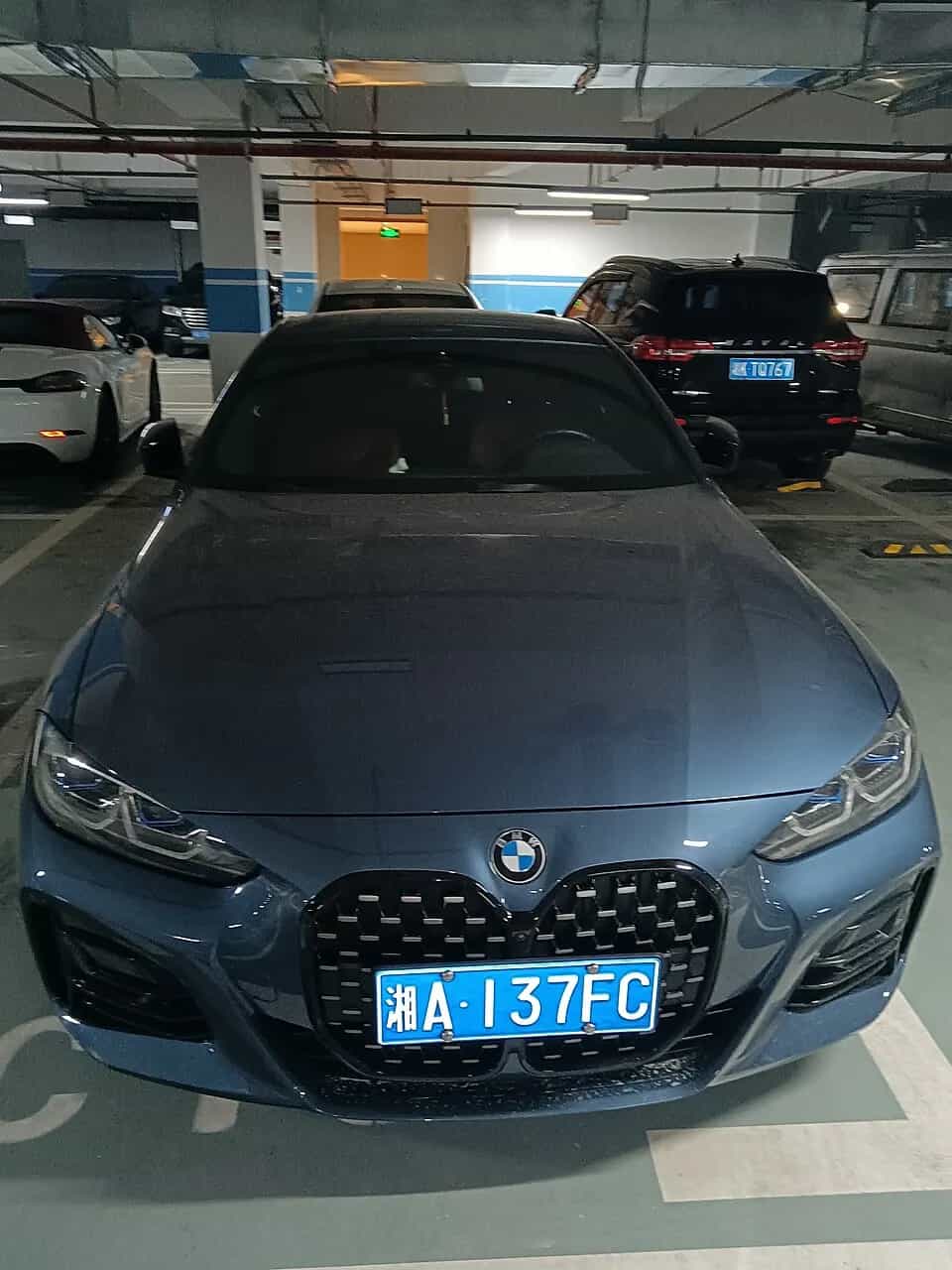
BMW 4 Series
Importing a used BMW 4 Series from the USA
The BMW 4 Series is one of the most requested coupes we source for clients who want a premium two-door or four-door fastback with rear-wheel-drive character and a straight-six option. The American used market carries huge volumes of well-optioned cars, often loaded with packages that were expensive extras in Germany. This guide walks through what actually exists on the US market, which engines and generations to look for, and how importing a used 4 Series works in practice. USCar Trader acts purely as an independent broker between you and the US seller, so you keep full control over the car you choose.

Model history: years and generations
BMW split the coupe and convertible off from the 3 Series in 2014, creating the standalone 4 Series. The first generation (chassis codes F32 Coupe, F33 Convertible, F36 Gran Coupe) ran from 2014 to 2020. The Gran Coupe added a practical four-door fastback with a hatchback tailgate, while the Convertible used a folding metal hardtop. The M4 (F82 Coupe, F83 Convertible) arrived with the S55 twin-turbo inline-six. The second generation (G22 Coupe, G23 Convertible, G26 Gran Coupe) launched from 2020 onward, recognisable by the tall vertical kidney grille, a switch to a fabric soft-top on the Convertible, and 48-volt mild-hybrid assistance on the six-cylinder cars. The M4 (G82) moved to the S58 engine. The fully electric i4 shares the G26 Gran Coupe body but is sold as its own line.
Engines, transmissions and drive
US-market 4 Series cars centre on two engine families. The four-cylinder cars (428i, then 430i) use BMW's 2.0-litre turbo — the N20/N26 early on, later the B46/B48 — producing roughly 240 to 255 hp. The six-cylinder cars are the ones enthusiasts chase: the 435i and 440i run the 3.0-litre single-turbo N55, then B58, with the M440i making 382 hp thanks to its mild-hybrid setup. The M4 uses the dedicated S55 (425 hp) or S58 (473–503 hp) twin-turbo six. Almost every US car pairs the engine with the ZF 8-speed automatic; a six-speed manual was offered on the M4 and remains rare. Rear-wheel drive is standard, and BMW's xDrive all-wheel drive was a widely selected option — useful for a car that will see German winters.
Equipment lines and body styles
American 4 Series buyers chose from three body styles (Coupe, Convertible, Gran Coupe) and, on the pre-2020 cars, packages rather than European-style trim lines. Look for the M Sport package (chassis, brakes, aero and steering wheel), the Premium and Technology packages (head-up display, navigation, keyless), and Harman Kardon audio. On the newer G-series, equipment is bundled similarly. The M440i and M4 sit at the top; the 430i is the volume seller.
The US used market
Supply is deep. Lease returns flood the market with three-to-five-year-old cars, and it is realistic to find low-mileage examples with full option packages. Sun-belt states offer rust-free cars, which matters for German registration. Typical import candidates run from roughly 30,000 to 90,000 miles. Because Americans favoured big equipment lists, US cars often carry features that command a premium here. As an import broker we help you read the window sticker and build sheet so you know exactly what a car has before committing.
Is an import right for you?
Importing a used BMW 4 Series from the USA makes most sense if you want a specific colour-and-option combination that is scarce in Germany, a manual M4, or simply a cleaner, higher-spec car than the local market offers. Buyers who value the six-cylinder engines — increasingly rare — will find the American pool especially rewarding.
Specs at a glance
| Attribute | Detail (typical US-market examples) |
|---|---|
| Body styles | Coupe (F32/G22), Convertible (F33/G23), Gran Coupe (F36/G26) |
| Generations | 1st: 2014–2020; 2nd: 2020–present |
| Four-cylinder | 2.0 L turbo (N20/N26/B46/B48), ~240–255 hp |
| Six-cylinder | 3.0 L turbo (N55/B58), 320–382 hp |
| M4 engine | 3.0 L twin-turbo (S55 425 hp / S58 473–503 hp) |
| Transmission | ZF 8-speed automatic; 6-speed manual (M4) |
| Drive | Rear-wheel drive; xDrive AWD optional |
| 0–100 km/h | ~5.5 s (440i) to ~3.9 s (M4 Competition) |
| Fuel | Premium petrol |
| Length | ~4,640–4,780 mm depending on body |
| Seating | 4–5 |
| Fuel tank | ~59 litres |
| Boot (Gran Coupe) | ~470 litres |
| Assembly | Germany (and Mexico) — European build, not US origin |
Common issues buyers should know
The 4 Series is broadly durable, but each engine has known weak points. The early N20/N26 four-cylinders (roughly 2012–2015) are notorious for timing chain wear and oil consumption — check service history and listen for rattle on cold start. The N55 six can suffer wastegate rattle, water pump and VANOS issues. The newer B58 six is one of BMW's strongest modern engines, though valve-cover and oil-filter-housing gaskets weep with age. Direct injection means carbon build-up on intake valves across the range; walnut-blasting is normal maintenance. Convertible owners should test the roof mechanism fully. Run-flat tyres ride harshly and are worth budgeting to replace. Overall, a documented BMW 4 Series with proof of oil-service intervals is a sound long-term car.
Differences from the European version
Mechanically, US and European cars are near-identical, which makes the 4 Series import-friendly. The differences are in equipment and legal fitment: US cars have amber side-marker lights, a speedometer reading in mph, and headlights set for right-hand US traffic. Crucially, most US cars lack a rear fog lamp, which German registration requires. Telematics and the SOS emergency-call module differ from the European eCall standard. None of these are deal-breakers; they are routine adaptation items covered below.
Import step by step
The process runs: select the car and review its build sheet and history report; verify the VIN and the manufacturing plant to establish origin; place funds in escrow rather than paying the seller directly; arrange inland transport to the export port and ocean freight (usually container or RoRo to Bremerhaven or Rotterdam); clear EU customs on arrival; present the car for TÜV inspection and individual approval (Einzelabnahme per §21 StVZO); then register it at your local authority. We coordinate each handover so the car moves cleanly from a US driveway to a German plate.
Customs and taxes: what applies
In short: the 0% duty rate applies only with documented US origin (VIN/plant) – German import VAT of 19% is always due.
Two separate charges apply on import. The first is EU import duty, whose rate depends on the car's actual origin. The 0% preferential rate under Regulations (EU) 2026/1455 and 2026/1461 applies only to vehicles of provable US origin (VIN and plant), shipped directly, and only from 1 July 2026 until 31 December 2029. The 4 Series is built in Germany (and Mexico), so a US-built example is unusual; in the typical case the standard third-country car rate of 10% applies to the customs value. The second charge always applies regardless of origin: the 19% German import VAT (Einfuhrumsatzsteuer), calculated on the customs value plus duty and freight. We never promise duty-free import and we never add a margin — you pay the seller, the freight and the state charges directly.
Modifications and single-vehicle approval
Typical adaptation for a US 4 Series includes fitting or activating a rear fog lamp, coding the instrument cluster to km/h (or fitting a compliant cluster), adjusting or replacing headlights for European beam pattern, and removing amber side-marker function where required. The odometer must read in kilometres for the registration document. A CoC (Certificate of Conformity) may be obtainable for some cars, otherwise the individual approval route documents compliance.
What to verify before buying
Before you commit to a used BMW 4 Series, confirm: (1) the VIN matches the title and the build sheet; (2) a clean Carfax or AutoCheck history with no accident or salvage/branded title; (3) no rust on the subframe, sills or wheel arches — favour dry-state cars; (4) documented oil-service intervals, ideally with receipts; (5) title status is clear (not salvage, flood or lemon); (6) the convertible roof or M-specific hardware functions correctly; (7) matching tyres and no warning lights on a cold start.
Common questions
Can I import a BMW 4 Series with 0% customs duty?
Only if the specific car is of provable US origin by VIN and plant and is shipped directly to the EU. The 4 Series is generally built in Germany, so most examples do not qualify and the standard 10% car duty applies. The 19% import VAT always applies on top.
Is the M4 worth importing from the USA?
For a manual M4 or a specific colour-and-option car, yes — the US pool is far larger than the German one. Mechanically the cars are the same; only lighting and cluster adaptation are needed.
Which engine is the most reliable?
The B58 3.0-litre six in the 440i and M440i is regarded as one of BMW's toughest modern engines. Early N20 four-cylinders need the most careful history check.
How long does shipping take?
Ocean freight to a North European port typically runs three to six weeks, plus inland US transport and customs clearance.
Do US cars have a rear fog lamp?
Usually not. Fitting or activating one is a standard part of the TÜV adaptation for German registration.
Can the speedometer stay in mph?
No. The registration document requires kilometres, so the cluster is coded or replaced during the approval process.
Are US-market packages compatible with European roads?
Yes. Navigation, driver assistance and audio work here; only the telematics/SOS module differs from EU eCall, which is not a registration barrier for an individual import.
What condition should I expect?
Sun-belt lease returns are often rust-free with full option lists. We help you screen out flood, salvage and heavily worn cars before purchase.
Ready to start? Browse BMW in the Carhub, compare related models such as the BMW 2 Series, the electric BMW i4 and the BMW M4 Coupe, or view current 4 Series listings. As your independent import broker, we handle the sourcing, VIN origin check and freight while you choose the car.